
How to write subcontractor case studies a PQQ, a bid writer and an AI assistant can all use
The nine fields every subcontractor case study needs, a worked groundworks example, how to write one without naming the client and where it goes on the site.
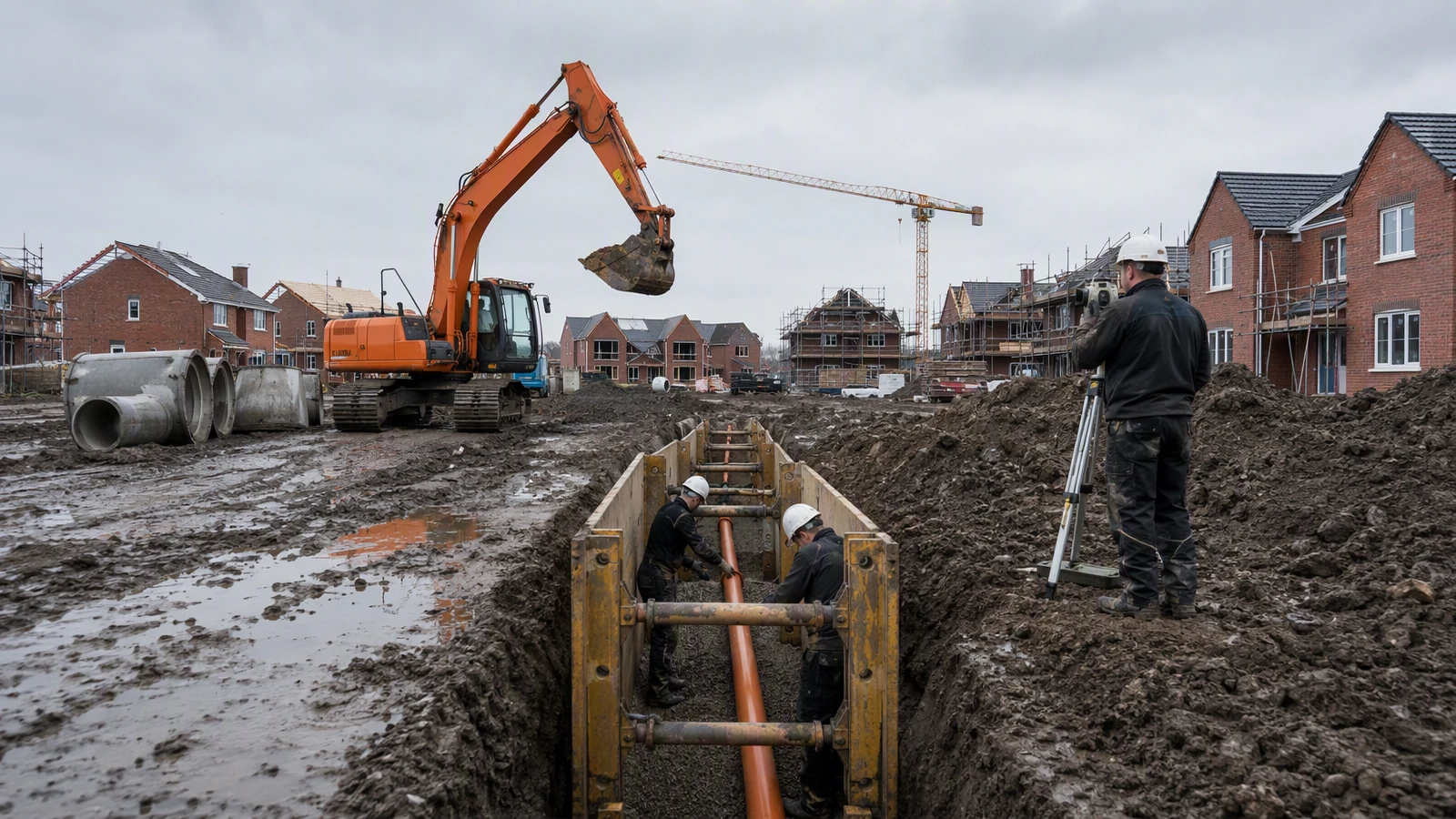
- A PQQ experience question asks for the same fields every time: project, client, main contractor, sector, package value, programme, scope, outcome and a referee.
- A website case study that carries those nine fields can be lifted straight into a bid and is read by procurement teams and AI tools as evidence rather than decoration.
- Use a value band rather than a figure, which proves scale without disclosing a rate, and describe the client by type and region if you cannot name them.
- Constraints and how you handled them are what the quality question is really asking.
- File case studies by sector and trade, link them from the trade pages and capability statement, and add three a year.
Most subcontractor case studies are a photo of a finished job and a caption. A bid writer cannot use that. A procurement team scoring a quality submission cannot score it. An AI assistant asked who has delivered a £500k education package in the Midlands cannot cite it. This guide sets out the format all three of them need, with a worked example you can copy.
What a PQQ actually asks for
Look at the experience section of any pre-qualification questionnaire and the fields are nearly always the same: project name, client, main contractor if you were a subcontractor, the sector, the value of your package, the start and end dates or programme, a description of your scope, the outcome, and a contact who can act as a referee. Some add the form of contract, the site constraints and what you did about health and safety or carbon. Three examples at the right value band are usually required.
If your website case studies carry those fields, your bid writer lifts them straight in and the procurement team reads the same evidence on your site when they check. If your case studies do not, every tender starts with someone digging through old files for the value of a job finished two years ago.
The format
Each case study is one page on your website with a fixed set of fields at the top and a short narrative underneath. The fields matter more than the prose.
- Project: the development or building name, or a plain description if you cannot name it.
- Client and main contractor: named with permission, otherwise described, for example “a national Tier 1 contractor” or “a North West housing association”.
- Sector: housing, education, healthcare, commercial, industrial, infrastructure. Pick one; it is how buyers search.
- Package value: a band, not the figure. £100k to £250k, £250k to £500k, £500k to £1m, £1m to £2m, £2m plus. It proves scale without disclosing a rate.
- Programme: start and finish month, and the duration in weeks.
- Scope: what you actually did, in two or three sentences, using the trade’s own terms. Volumes help: cubic metres of excavation, tonnes of steel, square metres of cladding.
- Constraints and how you handled them: live site, occupied building, party walls, railway, tight programme. This is what the quality question is really asking.
- Outcome: handed over on programme, zero RIDDOR, 96% waste diverted, client retained you for the next phase.
- Named contracts manager: the person who ran it. Competence attached to a name is what buyers and AI tools both treat as evidence.
A worked example
Project: Phase 2 groundworks and drainage, 142-home development, County Durham. Client: a regional housebuilder. Sector: housing. Package value: £500k to £1m. Programme: March to October 2025, 32 weeks. Scope: bulk earthworks, strip and trench foundations for 142 plots, 2.1km of adoptable foul and surface water drainage to section 104 standard, road box and kerbing to section 38. Constraints: a live phase 1 occupied by residents, a culvert diversion under Environment Agency consent and a programme compressed by six weeks after a late start. Outcome: handed over on the revised programme, drainage adopted first time, no RIDDOR incidents over 11,400 hours, awarded phase 3. Contracts manager: named, with a phone number for reference requests.
That is 110 words of fields. A bid writer can complete three PQQ experience questions from it in twenty minutes. An AI tool asked for groundworks subcontractors in the North East with housing experience above £500k has every term it needs to cite it.
Writing it without naming the client
You often cannot name the client or the main contractor without permission, and sometimes not even then. It rarely matters. Describe them by type and region, name the sector and the package value, and keep the specifics in the scope and constraints. Buyers know what a “national Tier 1 contractor” on a “£1m to £2m healthcare package” means. What they cannot forgive is a case study with no value, no programme and no scope.
Where it goes on the site
- One page per case study, with the fields marked up as structured data so AI tools read them as facts rather than prose.
- Filed by sector and by trade, so a buyer looking for education work finds the education projects without scrolling past everything else.
- Linked from the trade page it belongs to and from the capability statement on your website, so a reader always has a next step.
- Three new ones a year as a minimum, with the oldest retired once they are more than five years old, because buyers discount anything older.
What to do this week
- Pick your three best packages from the last three years at the values you want more of.
- Fill in the nine fields for each from the job file, including the value band and the programme.
- Ask the contracts manager on each whether they will act as a referee, and get the client’s permission to name them if you want to.
Why the format matters more in 2026
Since PAS 91 was withdrawn, the question set buyers pre-qualify against is the Common Assessment Standard, and its experience questions ask for the same fields as this guide. Build UK, through the trade body INCA, puts the cost of pre-qualification to the industry at up to £1 billion a year, most of it spent answering the same questions in different formats. A case study written once in the right shape is answered once.
The commercial case is sharper than it was. The Insolvency Service recorded 3,866 construction insolvencies in England and Wales in the year to August 2026, the highest of any sector, with specialist contractors making up 56% of the August total. Main contractors now check a subcontractor’s track record and financial standing more carefully before they award, and a case study with a value band, a programme and a named referee is the quickest way to pass that check. The supply chains guide covers what else they look for.
Next stepSee how we build case studies into a websitePQQ-format case studies are written into every Groundproof build.Questions this raises
How many case studies do I need?
Three at each value band you tender at, in each sector you want more of, is the practical minimum. Most PQQs ask for three examples; having more than nine on the site is rarely necessary.
What if the client will not let me name them?
Describe them by type and region, name the sector and package value, and keep the specifics in the scope and constraints. Buyers understand what a national Tier 1 on a healthcare package means.
Should I include photos?
Yes, but as support for the fields rather than instead of them. One or two site photos and a finished shot are enough. A gallery with a caption is the format we are trying to replace.
How old can a case study be?
Buyers discount anything older than about five years and most PQQs ask for examples from the last three to five. Retire the oldest as you add new ones.
See where your own website stands.
The free Tender Check scores your site on the four stages buyers and AI tools check before they shortlist a subcontractor. Three minutes, your result straight away and a personal review within one working day.